How to Choose the Right Adult Toy Supplier: A Complete B2B Buyer’s Guide
Finding the right adult toy supplier is one of the most important decisions for any adult product brand, wholesaler, distributor, or online retailer.
A reliable supplier does more than provide products at competitive prices. They help you maintain consistent product quality, develop new products, manage production efficiently, and build a sustainable business.
However, with so many manufacturers and trading companies in the market, how can you identify a supplier that truly fits your business?
In this guide, we will walk you through the key factors to consider when choosing an adult toy supplier, from manufacturing capabilities and product quality to certifications, customization services, pricing, and long-term cooperation.
1. Manufacturer or Trading Company: Know Who You Are Working With
One of the first things to clarify is whether you are dealing directly with a manufacturer or a trading company.
Both can have a place in the supply chain, but understanding the difference helps you make a more informed decision.
Working with a Manufacturer
A direct manufacturer may offer several advantages:
- Better visibility into the production process.
- More direct communication about product specifications.
- Greater flexibility for OEM and ODM projects.
- Better control over quality management.
- More opportunities to develop customized products.
For brands planning to build their own product lines, working directly with a manufacturer can make product development and long-term cooperation more efficient.
Working with a Trading Company
Trading companies may offer a wider range of products from different factories and can simplify sourcing when you need multiple product categories.
However, you should clarify who actually manufactures the products, who is responsible for quality control, and how product issues will be handled.
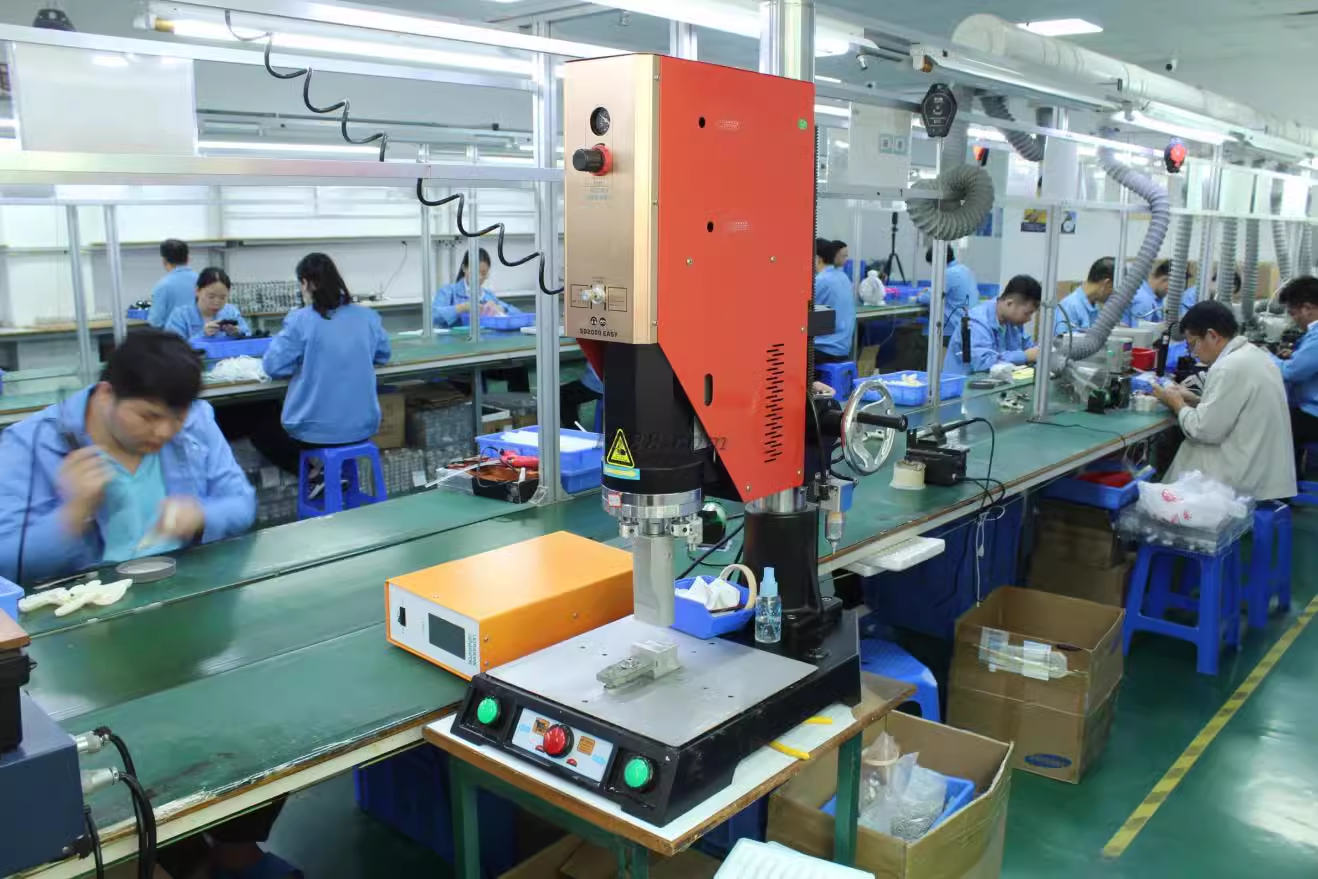
Our recommendation: Don’t choose a supplier based only on how they describe themselves. Ask about their factory, production equipment, manufacturing experience, quality control procedures, and actual production capabilities.
2. Evaluate Manufacturing Experience and Production Capabilities
A supplier’s experience can tell you a lot about its ability to handle your orders.
However, years in business alone are not enough. You should also understand what the company can actually manufacture.
Consider asking the following questions:
- How many years have you been manufacturing adult products?
- Which product categories do you specialize in?
- Do you have in-house production capabilities?
- Can you support product development and customized designs?
- What is your production capacity?
- How do you manage quality inspections?
For example, if you are sourcing silicone products, your supplier should understand material selection, mold development, product finishing, and production consistency.
If you are developing electronic products, you should also evaluate their experience with motors, batteries, charging systems, waterproof structures, and functional testing.
A supplier with relevant manufacturing experience is generally better positioned to understand your technical requirements and production challenges.
3. Check Product Materials and Quality Standards
Product quality should never be evaluated by appearance alone.
For adult products, material selection, manufacturing processes, and finished-product inspections all matter.
Depending on the product category, common materials include:
- Silicone: Widely used in premium adult products because of its soft feel, flexibility, and durability.
- TPE: Often selected for its flexibility and soft texture.
- ABS Plastic: Commonly used for rigid product components and electronic housings.
- Stainless Steel: Used in selected premium products and accessories.
When evaluating a supplier, ask:
- What materials are used in the product?
- Can you provide material specifications or supporting documentation?
- Are incoming materials inspected?
- How are finished products tested?
- Can you provide samples before bulk production?
For products containing electronic components, you should also ask about functional testing, battery safety considerations, charging performance, and waterproof testing where applicable.
A professional supplier should be able to explain its materials and quality procedures clearly rather than simply claiming that all products are high quality.
4. Verify Certifications and Market Compliance
Product compliance is another essential consideration, especially if you plan to sell in multiple countries.
Different markets may have different requirements depending on product type, materials, electrical components, batteries, labeling, and intended use.
For example, buyers selling in the European market may need to consider applicable CE-related requirements, RoHS restrictions where relevant, and other product-specific obligations.
For the United States and other markets, requirements may differ depending on the product and its classification.
Before placing an order, ask your supplier:
- What compliance documents are available for the specific product?
- Are test reports issued by recognized laboratories?
- Do the documents match the exact product model and configuration?
- Can the supplier support additional testing if required?
- Who is responsible for arranging and paying for testing?
Important: A factory certificate or a general company document does not automatically prove that every product complies with every market’s requirements. Always verify documentation against the specific product and destination market.
5. Evaluate OEM and ODM Capabilities
If you are building your own adult product brand, customization capabilities can be a major competitive advantage.
A capable OEM/ODM supplier should be able to support more than simply printing your logo on an existing product.
OEM Services
OEM (Original Equipment Manufacturing) generally means producing products according to your specifications, design, or requirements.
Typical services include:
- Custom logo printing.
- Private label packaging.
- Customized colors and finishes.
- Product specification adjustments.
- Custom product configurations.
ODM Services
ODM (Original Design Manufacturing) involves developing products based on the manufacturer’s existing designs or development capabilities.
Depending on the supplier, this may include:
- Product concept development.
- Industrial design support.
- 3D modeling and structural development.
- Mold development.
- Prototype production.
- Product improvement and optimization.
Before starting a custom project, clarify design ownership, tooling costs, mold ownership, intellectual property protection, sample approval procedures, and mass-production specifications.
For new brands, a supplier with practical OEM/ODM experience can help turn product ideas into commercially viable products.
6. Compare MOQ, Pricing, and Total Purchasing Costs
Price is important, but the lowest quotation does not always represent the best value.
When comparing suppliers, make sure you are comparing the same product specifications, materials, accessories, packaging, and quality requirements.
You should clarify:
- Minimum Order Quantity (MOQ).
- Sample costs.
- Unit prices at different order quantities.
- Customization and mold charges.
- Packaging costs.
- Shipping terms.
- Payment terms.
- Any additional inspection or testing costs.
For example, one supplier may offer a lower unit price but require a much higher MOQ. Another may offer more flexible order quantities and better customization support.
Look at the total purchasing cost rather than focusing only on the product’s unit price.
If you are launching a new brand or testing a new product category, flexible MOQ arrangements can also help reduce inventory risk.
7. Test Samples Before Placing Bulk Orders
Never rely entirely on product photos, videos, or written descriptions.
Requesting samples is one of the most effective ways to evaluate a supplier before committing to a large order.
During sample evaluation, pay attention to:
- Material feel and surface finishing.
- Product dimensions and weight.
- Assembly quality.
- Functional performance.
- Charging and battery performance, where applicable.
- Noise levels, where relevant.
- Waterproof performance, if the product is advertised as waterproof.
- Packaging quality.
For customized products, make sure the approved sample matches the specifications that will be used for mass production.
It is also important to establish an inspection standard before production begins. This helps both parties understand what qualifies as an acceptable finished product.
8. Assess Communication and After-Sales Support
Good communication is often overlooked during supplier selection.
However, communication quality can directly affect product development, order execution, and problem resolution.
A reliable supplier should be able to:
- Respond to inquiries clearly and professionally.
- Understand your product requirements.
- Provide realistic production schedules.
- Explain technical details when needed.
- Update you on production progress.
- Handle quality issues through a clear process.
Before placing a large order, pay attention to how the supplier communicates during the quotation and sampling stages.
If basic questions are difficult to resolve before payment, managing a more complex production order may become even harder.
You should also clarify the supplier’s warranty policy, defect-handling process, replacement policy, and after-sales responsibilities.
9. Watch Out for These Supplier Red Flags
Not every supplier that offers attractive prices is a suitable long-term partner.
Be cautious if you notice any of the following:
- The supplier cannot clearly explain its manufacturing capabilities.
- Product specifications change between quotations and samples.
- The supplier refuses to provide reasonable product documentation.
- Certifications or test reports cannot be verified.
- The supplier promises unrealistic production timelines.
- Pricing is unusually low without a clear explanation.
- There is no defined quality inspection process.
- The supplier avoids discussing responsibility for defective products.
- Communication becomes unreliable after receiving payment.
A professional supplier should be transparent about its capabilities, limitations, production arrangements, and commercial terms.
10. Build a Long-Term Partnership Instead of Just Finding a Low-Cost Supplier
Choosing an adult toy supplier should not be a one-time purchasing decision.
For growing brands and distributors, a long-term manufacturing partnership can support:
- More consistent product quality.
- Faster development of new products.
- Better coordination of repeat orders.
- More efficient packaging and branding updates.
- Improved production planning.
- Better understanding of your target market.
Instead of evaluating suppliers only by their first quotation, consider whether they can support your business as it grows.
A supplier that understands your product positioning, customer expectations, and long-term plans can become a valuable part of your supply chain.
11. A Practical Checklist for Choosing an Adult Toy Supplier
Before making your final decision, use this checklist to compare potential suppliers.
| Evaluation Factor | What to Check |
|---|---|
| Manufacturing Experience | Relevant industry experience and product specialization |
| Factory Capabilities | Actual production processes and equipment |
| Calidad del producto | Material specifications and inspection procedures |
| Compliance | Product-specific documents and market requirements |
| OEM/ODM Services | Design, customization, molds, and private labeling |
| MOQ and Pricing | Transparent quotations and flexible order quantities |
| Sample Quality | Product performance and consistency |
| Production Capacity | Ability to meet your order requirements |
| Communication | Clear responses and professional support |
| After-Sales Service | Warranty, defect handling, and problem resolution |
You can use this checklist to compare two or more suppliers before making a purchasing decision.
12. Why Consider Enbee as Your Adult Toy Manufacturing Partner?
At Enbee, we understand that B2B buyers need more than a supplier offering a product catalog. They need a manufacturing partner who can support product selection, customization, quality management, and long-term business development.
With 15 years of experience in adult product manufacturing, Enbee works with customers looking for reliable product sourcing and customized manufacturing solutions.
Our services focus on helping business customers develop and source products through:
- Adult product manufacturing experience.
- OEM and ODM customization support.
- Private label and packaging solutions.
- Product selection and development assistance.
- Communication throughout the order process.
Whether you are an established brand expanding your product range or a new business preparing to launch your own collection, choosing the right manufacturing partner is an important step.
Looking for an adult toy supplier for your business?
Contact Enbee to discuss your product requirements, customization ideas, and wholesale or OEM/ODM needs.
Visit our website: https://enbeetoy.com/
Frequently Asked Questions
1. How do I find a reliable adult toy supplier?
Start by identifying manufacturers with relevant industry experience. Evaluate their production capabilities, product quality, material documentation, compliance support, sample quality, and communication. Always request samples and clarify order terms before placing a bulk order.
2. Should I buy directly from an adult toy manufacturer?
Buying directly from a manufacturer can provide better visibility into production, more direct technical communication, and greater customization flexibility. However, you should still verify that the company has the capabilities and quality management processes your business requires.
3. What is the difference between OEM and ODM adult toys?
OEM manufacturing involves producing products according to your specifications or designs. ODM services generally involve adapting or developing products using the manufacturer’s design and development capabilities. The exact scope should be agreed upon before starting a project.
4. What is a typical MOQ for adult toys?
MOQ varies depending on the product, materials, production process, customization requirements, and packaging. Standard products may have different minimum quantities from fully customized products. Ask suppliers for MOQ options based on your specific requirements.
5. What documents should I request from an adult toy supplier?
Depending on the product and target market, you may need material specifications, relevant test reports, product safety documentation, electrical or battery-related documents, and applicable compliance records. Always verify that documents correspond to the actual product model you intend to purchase.
6. Can an adult toy manufacturer help develop my own brand?
Many manufacturers offer OEM/ODM services, including logo customization, private label packaging, product modifications, and product development support. Confirm the available services, design ownership, tooling arrangements, and intellectual property terms before starting.
Final Thoughts
The right adult toy supplier should offer more than competitive prices. Manufacturing experience, product quality, compliance awareness, customization capabilities, transparent communication, and dependable after-sales support all contribute to a successful sourcing partnership.
Take the time to evaluate your options, request samples, and compare suppliers using clear standards.
A well-chosen manufacturing partner can help your business reduce sourcing risks, develop better products, and grow with greater confidence.
Website: https://enbeetoy.com/
OEM & ODM Services: https://enbeetoy.com/oem-odm/